
Health , Education
The Future of Health and Learning Systems


Changing Priorities in Modern Society
Health and education have always been essential parts of human development, but their importance has increased significantly in the modern world. In 2026, societies are facing new challenges related to technology, mental health, digital learning, economic pressure, and lifestyle changes. Because of this, both healthcare systems and educational institutions are evolving rapidly to meet modern needs.
People now understand that strong communities cannot exist without proper healthcare access and quality education. These two sectors influence every aspect of life, including economic growth, social stability, employment opportunities, and overall well-being.
Modern governments, organizations, and communities are investing more resources into improving educational quality and healthcare accessibility. The future of successful societies depends heavily on how effectively these systems continue to develop.
Digital Transformation in Education
Education has changed dramatically due to digital technology. Traditional classrooms are no longer the only source of learning. Students can now access educational content through online platforms, mobile applications, virtual classrooms, and digital learning systems.
This transformation has created greater flexibility for learners worldwide. People living in remote areas can now study through online courses and digital programs without relocating to large cities.
Educational institutions are also using artificial intelligence, virtual simulations, and interactive systems to improve learning experiences. Modern students expect faster access to information and more engaging educational methods.
Technology has made learning more accessible, personalized, and efficient for millions of people around the world.
Healthcare in the Modern Era
Healthcare systems are also experiencing major transformations. Medical institutions now rely heavily on digital tools, online consultations, data management systems, and advanced technologies to improve patient care.
Telemedicine has become increasingly common, allowing patients to receive medical guidance remotely. This has improved healthcare accessibility for individuals living in distant or underserved regions.
Modern healthcare focuses not only on treatment but also on prevention, wellness, and long-term health management. Doctors and healthcare professionals encourage healthier lifestyles to reduce future medical complications.
The healthcare industry continues to adopt technologies that improve diagnosis accuracy, treatment efficiency, and patient communication.
Mental Health Awareness
Mental health has become one of the most important discussions in modern society. Stress, anxiety, depression, and emotional exhaustion are affecting people of all age groups due to work pressure, social expectations, and digital overload.
Educational institutions and workplaces are now paying more attention to mental wellness. Schools are introducing counseling programs, awareness campaigns, and emotional support systems for students.
Healthcare providers are also increasing mental health services and encouraging open discussions about emotional well-being. Modern societies are gradually reducing the stigma associated with mental health treatment.
People are beginning to understand that mental wellness is equally as important as physical health.
The Connection Between Education and Health
Education and health are deeply connected. People with better education often make healthier lifestyle choices because they understand the importance of nutrition, exercise, hygiene, and preventive care.
Educated communities are usually more aware of healthcare practices and public health responsibilities. They are also better prepared to respond during health emergencies and social challenges.
Similarly, healthy students perform better academically because physical and mental wellness directly affect concentration, motivation, and learning ability.
Strong educational and healthcare systems work together to improve social development and economic stability.
Technology and Student Learning
Modern students learn differently compared to previous generations. Digital devices, educational videos, interactive applications, and online communities have changed how information is consumed.
Teachers now use smart boards, multimedia presentations, and virtual collaboration tools to create more engaging classrooms. Educational technology helps students develop problem-solving skills and independent learning habits.
Online learning platforms also provide opportunities for lifelong education. Adults can improve professional skills and gain certifications without attending traditional universities.
Technology continues to reshape the future of education by making learning more flexible and globally connected.
Public Health and Community Awareness
Public health awareness plays a major role in building healthier societies. Governments and healthcare organizations regularly promote campaigns related to disease prevention, vaccination, hygiene, nutrition, and healthy lifestyles.
Modern communities are becoming more aware of the importance of preventive healthcare. People now seek regular medical checkups and pay more attention to health-related information.
Educational institutions also contribute by teaching students about physical health, mental wellness, and healthy habits from an early age.
Strong public awareness programs help reduce disease spread and improve long-term healthcare outcomes.
The Importance of Skilled Teachers
Teachers remain one of the most important parts of the educational system. Technology may improve learning methods, but human guidance and mentorship continue to be essential.
Skilled teachers help students develop confidence, creativity, discipline, and critical thinking abilities. They also support emotional development and encourage lifelong learning.
Modern educators must adapt to changing teaching environments and digital learning systems. Continuous professional development helps teachers remain effective in modern classrooms.
Educational quality often depends on the dedication and capability of teachers.
Healthcare Accessibility Challenges
Despite technological progress, many regions still face healthcare accessibility challenges. Some communities struggle with limited medical facilities, financial barriers, and shortages of healthcare professionals.
Rural areas often experience difficulties accessing specialized treatments and emergency services. Economic inequality can also prevent individuals from receiving proper healthcare.
Governments and organizations are working to improve healthcare infrastructure and expand affordable medical services. Digital healthcare systems are helping reduce some of these barriers by providing remote consultations and online support.
Healthcare accessibility remains an important priority for modern societies.
The Role of Parents in Education
Parents play a major role in educational success. Supportive home environments often improve student motivation, confidence, and academic performance.
Modern parenting involves balancing emotional support with educational guidance. Parents are increasingly involved in school communication, digital learning, and extracurricular development.
Children who receive encouragement at home are more likely to develop positive learning habits and stronger social skills.
Family involvement remains an important factor in educational achievement.
Physical Activity and Student Development
Physical activity is essential for healthy development among children and students. Exercise improves physical health, concentration, emotional stability, and social interaction.
Schools now recognize the importance of sports, physical education, and recreational activities in student development. Active lifestyles reduce stress and improve overall well-being.
Modern healthcare experts encourage balanced routines that combine education with physical movement and healthy habits.
Physical wellness contributes directly to better academic and emotional performance.
Artificial Intelligence in Healthcare
Artificial intelligence is changing the healthcare industry in multiple ways. AI-powered systems help doctors analyze medical data, improve diagnosis accuracy, and monitor patient conditions more effectively.
Hospitals are using intelligent systems to manage patient records, automate scheduling, and improve operational efficiency.
AI technology also supports medical research by identifying patterns and predicting potential health risks.
Although human expertise remains essential, artificial intelligence is helping healthcare professionals deliver faster and more accurate services.
Education and Career Development
Education strongly influences career opportunities and financial stability. Skilled individuals are more likely to access higher-paying jobs and professional growth opportunities.
Modern economies require workers with digital knowledge, communication abilities, and problem-solving skills. Educational institutions are adapting programs to prepare students for evolving industries.
Career-focused education now includes technical training, digital literacy, entrepreneurship, and practical experience.
Lifelong learning has become increasingly important as industries continue changing rapidly.
Healthy Lifestyles and Prevention
Preventive healthcare is becoming more important than reactive treatment. Healthcare professionals encourage healthier lifestyles to reduce long-term medical risks.
Balanced nutrition, regular exercise, stress management, and proper sleep contribute to better physical and mental health.
Educational campaigns promote awareness about smoking risks, unhealthy diets, and sedentary lifestyles. Modern societies are focusing more on prevention because it improves long-term healthcare outcomes and reduces medical costs.
Healthy communities are generally more productive and socially stable.
Online Learning and Global Education
Online learning has expanded educational opportunities across the world. Students can now access international courses, language programs, and professional certifications through digital platforms.
Global education systems are becoming more connected through virtual collaboration and online communication tools. Students can interact with educators and peers from different countries without physical travel.
This global accessibility has increased educational flexibility and career opportunities for millions of learners.
Digital learning will continue shaping the future of education for many years.
Medical Innovation and Research
Medical research continues to improve healthcare quality and treatment possibilities. Scientists and healthcare professionals are developing advanced therapies, vaccines, diagnostic tools, and treatment methods.
Innovation in biotechnology, pharmaceuticals, and medical equipment has improved survival rates and disease management across many health conditions.
Research institutions and healthcare organizations work together to solve modern medical challenges and improve patient outcomes.
Continuous medical innovation remains essential for future healthcare progress.
Building Smarter Educational Systems
Educational systems must continue evolving to meet future social and economic needs. Modern schools and universities are focusing more on creativity, adaptability, collaboration, and digital skills.
Traditional memorization methods are gradually being replaced by critical thinking and practical learning approaches.
Educational institutions are also encouraging innovation, entrepreneurship, and independent problem-solving abilities among students.
Future learning systems will likely become more personalized and technology-driven.
The Economic Impact of Health and Education
Strong healthcare and education systems contribute significantly to economic growth. Healthy and educated populations are generally more productive, innovative, and financially stable.
Businesses also benefit from skilled workers and healthier communities. Economic development often depends on workforce quality and social well-being.
Countries that invest heavily in health and education usually achieve stronger long-term development and social progress.
These sectors are not only social priorities but also major economic foundations.
Conclusion
Health and education continue to shape the future of modern societies. Technology, innovation, and changing social expectations are transforming how people learn, receive medical care, and improve their quality of life.
Modern communities require accessible healthcare systems, quality education, mental health support, and continuous innovation to remain stable and productive.
As the world continues evolving, societies that prioritize health, learning, and human development will create stronger opportunities for future generations. Sustainable progress depends on investing in people, knowledge, wellness, and social responsibility.
Most people looking for a doctor, dentist, or specialist today start the same way: they open Google. That single habit has made a website one of the most important assets any medical practice owns, right alongside its physical location and its staff.
But simply having a website is not enough anymore. Competition among local practices is intense, and the clinics that show up first tend to capture the vast majority of new patient inquiries. Paid advertising can get you visibility quickly, but the cost adds up fast, and for many smaller practices it simply is not sustainable long term.
Search engine optimization offers a more durable alternative. Done properly, it is one of the most cost effective ways to make sure people searching for the exact care you provide actually find your practice first. This guide walks through what healthcare SEO actually involves and how to approach it in a way that genuinely moves the needle.
What Healthcare SEO Actually Means
Search engine optimization, broadly, is the process of making a website easier for search engines to understand and rank favorably. Healthcare SEO, sometimes called medical SEO, applies that same discipline specifically to websites belonging to clinics, hospitals, and individual practitioners.
Consider a simple example. Someone searching “optometrist in Baltimore” triggers tens of millions of results in under a second, yet the overwhelming majority of searchers never look past the first page, and a large share click only the very first organic result. That single fact explains why ranking well matters so much. A practice sitting on page one captures a meaningfully larger share of the patients actively looking for care right now.
Because most medical practices serve a local area, local search optimization plays an outsized role here too. Ranking within Google’s local pack, the small cluster of three businesses shown prominently for local searches, can dramatically increase visibility without requiring the same competitive push needed to rank organically for broader terms.
Beyond visibility, solid healthcare SEO brings a few compounding benefits. A well optimized site tends to load faster and navigate more smoothly, which genuinely improves the experience for patients trying to book an appointment. Ranking highly also signals a kind of implicit authority. Patients tend to trust practices that appear at the top of search results more readily than ones buried on page three. And because SEO specifically targets people already searching for the services you offer, the traffic it brings tends to convert into actual appointments far more reliably than generic advertising ever does.
The Three Pillars of Healthcare SEO
Any effective healthcare SEO strategy rests on three connected areas of work: what happens directly on your website, what happens beyond it, and how well you are positioned for local search specifically.
Getting Your On Page Foundation Right
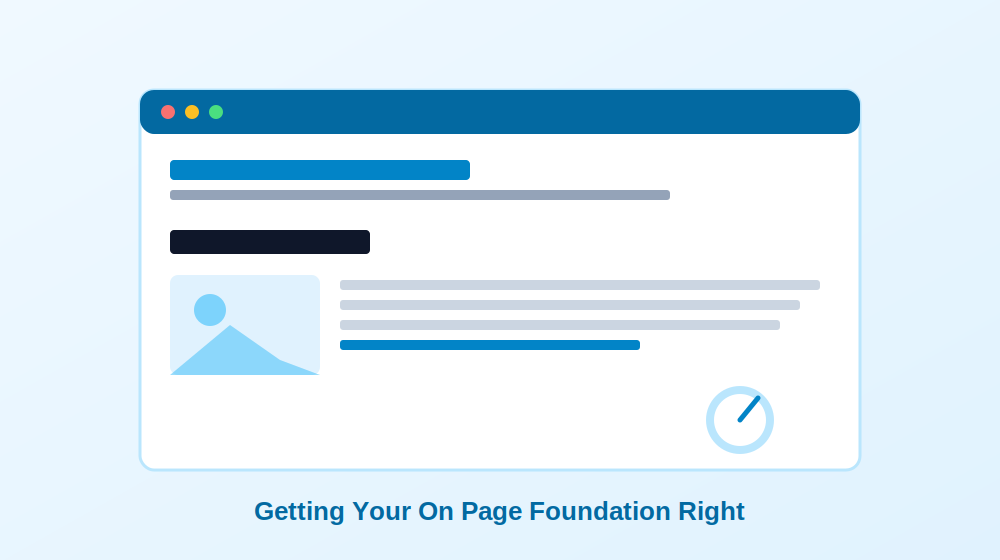
On page SEO covers everything you directly control on your own website: the code, the written content, the images, and structural elements that shape how both visitors and search engines understand your site.
A handful of elements matter most here. Your title tags, the clickable headline that appears in search results, need to be accurate and specific, ideally including the exact service and location a patient might search for, such as “pediatric dentist in Austin.” Meta descriptions, the short summary shown beneath that title, should mention the same targeted terms naturally, giving searchers a clear reason to click through.
Alt text on images helps search engines understand visual content they cannot otherwise interpret, which matters more than most practices realize given how image heavy many medical websites are. Header tags, particularly your main heading and subheadings, tell search engines what each page is actually about, so they should reflect real content rather than vague, generic phrasing.
Anchor text, the clickable text used in links pointing to other pages, should describe the destination clearly rather than relying on generic phrases like “click here.” Bold and italic formatting, used sparingly, helps both readers and search engines identify the most important points in a block of text. Even your footer deserves attention, since a well organized footer with clear contact details and internal links helps visitors and search engines navigate your site more easily.
A properly structured sitemap tells search engines which pages on your site matter most, while structured data specific to healthcare, often called schema markup, can help your practice details, provider credentials, and patient reviews appear more prominently and attractively within search results themselves.
Page speed deserves particular attention because it functions as both a direct ranking factor and a major driver of whether visitors stick around. A slow loading page pushes visitors straight to a competitor’s site before they even see what you offer. Mobile friendliness matters just as much, since a significant majority of health related searches now happen on a phone rather than a desktop computer.
Security and regulatory compliance round out the technical side. A secure, properly compliant website protects sensitive patient information during any online interaction, such as appointment booking, and that same security posture also signals trustworthiness to search engines evaluating your site.
Finally, content needs regular attention. Search engines consistently favor sites that keep their information current, and outdated medical content can actively work against you, both for rankings and for patient trust.
Targeting the Right Keywords for Real Patients
One of the most effective on page strategies involves moving beyond broad, highly competitive terms toward more specific, condition focused searches. Rather than competing exclusively for a term like “pediatrician,” which is both broad and fiercely contested, building dedicated content around queries like “how to manage childhood asthma at home” or “signs of ear infections in toddlers” tends to perform far better in practice.
These longer, more specific search phrases typically carry lower overall search volume individually, but the people typing them tend to have a clear, immediate need. Someone searching a specific symptom or treatment question is usually much closer to booking an appointment than someone typing a broad, generic term. Thoroughly answering these detailed questions on your site also reinforces your practice’s authority on that specific condition, which search engines increasingly reward with better visibility for niche, highly relevant medical content.
Building Authority Through Off Page SEO
While on page SEO covers everything within your direct control, off page SEO refers to actions taken elsewhere on the internet that build awareness of and trust in your practice. The most important piece of this puzzle is backlinks, meaning other websites linking back to yours.
Each time a reputable site links to your practice’s website, search engines interpret that as a small vote of confidence, a signal that your site is credible and worth trusting. Beyond the ranking benefit, being featured or mentioned elsewhere also drives direct referral traffic from people who encounter that mention.
Not all backlinks carry equal weight, however. A link from a site genuinely relevant to healthcare carries far more value than one from a completely unrelated industry, because it reinforces topical relevance alongside general authority. Many practices choose to work with a specialized SEO partner to build this kind of link profile deliberately rather than hoping it happens organically.
A few sources tend to be particularly valuable for healthcare specifically. Being listed accurately in established healthcare directories helps patients find you directly while also supporting reputation management, since these directories typically allow patient reviews. Press releases announcing new services or major practice news can generate a wave of legitimate exposure and links. Active, well maintained social media profiles help you stay connected with existing patients while contributing modestly to overall brand authority. And mentions or features within relevant blogs and articles build both awareness and genuine referral traffic over time.
Winning at Local SEO

Because medical practices are fundamentally local businesses, local search optimization deserves its own dedicated focus. The foundation here is a complete, accurate, and actively maintained Google Business Profile, which determines whether your practice shows up properly on Google Maps and within local search results.
Search engines weigh local ranking based primarily on three factors. Relevance asks whether your practice actually offers what the searcher is looking for. Distance considers how close your location sits relative to the person searching. Prominence reflects your overall reputation, including review volume and quality along with your presence across relevant directories.
Getting local SEO right in practice comes down to a few consistent habits. Your practice’s name, address, and phone number need to appear identically everywhere they show up online, from your website to every directory listing. Even small inconsistencies, like listing a doctor under a slightly different name variation across different platforms, can quietly undermine your local rankings. Actively managing reviews, meaning responding to feedback and genuinely incorporating patient input, also strengthens both your reputation and your local search prominence simultaneously.
Why Trust and Credibility Matter More in Healthcare
Search engines evaluate health related content against a notably higher bar than most other topics, given the potential real world consequences of inaccurate medical information. This heightened scrutiny centers on demonstrating genuine experience, expertise, authority, and trustworthiness throughout your site.
Practically, this means featuring clearly credentialed author information on medical content so readers understand where the information originates. It also means building out genuinely detailed provider pages that highlight board certifications, relevant education, and specific clinical expertise rather than vague, generic bios. Earning backlinks from genuinely authoritative medical sources further reinforces this trust signal in the eyes of search engines evaluating your site.
Ultimately, none of this exists purely to satisfy a ranking algorithm. It reflects a real responsibility to provide patients with accurate, safe information while they are actively making decisions that affect their health and wellbeing.
Measuring Whether Your SEO Effort Is Actually Working
Investing meaningful time and resources into healthcare SEO only makes sense if you can actually measure whether it is paying off. Tracking organic traffic growth over time using standard analytics tools is the natural starting point, showing whether more prospective patients are genuinely finding and visiting your site.
Conversion tracking matters even more for a medical practice specifically. Setting up clear, measurable goals around appointment bookings, contact form completions, and phone calls originating from organic search gives you a much more meaningful picture than traffic numbers alone. Calculating a genuine return on investment means weighing the lifetime value of patients acquired through search against whatever you are spending on the effort each month. Reviewing these numbers consistently, rather than only at the start of a campaign, is what actually allows you to refine and improve your approach over time.
Frequently Asked Questions
What are the three main components of healthcare SEO?
On page optimization covers the elements and usability of your own website. Off page optimization involves building authority through quality backlinks from other sites. High quality, genuinely useful content ties both together and is what ultimately attracts and retains organic traffic.
How do most healthcare practices approach SEO?
Many practices partner with an agency experienced specifically in healthcare marketing, covering on site optimization, backlink building for authority, and local search improvements together as a coordinated strategy.
How long does healthcare SEO take to show results?
This is a long term strategy rather than a quick fix. Most practices start seeing meaningful improvement in rankings and organic traffic within three to six months of consistent effort, though competitive markets or brand new websites often take longer, and ongoing work is needed to maintain results once achieved.
How much does healthcare SEO typically cost?
Costs vary considerably based on scope, practice size, and whether the work happens in house or through an agency. Professional healthcare SEO services generally range from around fifteen hundred to five thousand dollars monthly, with smaller, single location practices often needing a leaner budget than larger, multi location clinics.
How is healthcare SEO different from general SEO?
The core principles are the same, but healthcare SEO carries added responsibility. Medical sites must demonstrate higher content accuracy, showcase genuine professional credentials, and remain mindful of patient privacy regulations. Because health content falls into a high stakes category for search engines, the bar for quality and trust sits considerably higher than for most other industries.
What does medical SEO mean, and is it different from healthcare SEO?
Medical SEO and healthcare SEO refer to the same discipline and are used interchangeably. Both focus specifically on improving the online visibility of doctors, clinics, and hospitals for patients actively searching for local medical care.
Why does consistent business information matter for local healthcare SEO?
Keeping your practice’s name, address, and phone number identical across your website and every directory helps search engines verify your practice is legitimate and accurately located. Inconsistent information can confuse search engines, which often translates directly into weaker local rankings and missed patient appointments.
Final Thoughts
Healthcare SEO is not a quick trick or a one time project. It is an ongoing discipline built on a genuinely fast, secure, and well structured website, a deliberate strategy for earning relevant backlinks, and consistent, accurate local presence across the platforms patients actually use to find care. Practices that commit to this work consistently, rather than treating it as a one off task, tend to see steady, compounding growth in the patients who find them, precisely at the moment those patients are actively looking for help.
Text messaging has quietly become one of the most effective ways healthcare providers stay connected with patients. It is direct, immediate, and reaches people on the device they check most often. Whether you are running a small clinic looking for a better way to communicate or trying to modernize an existing patient outreach strategy, understanding how SMS fits into healthcare communication is worth the time investment.
Most people have a smartphone within arm’s reach at almost all times, which makes a short text message one of the fastest ways to actually get a patient’s attention. If your clinic is only using text messages for appointment reminders, you are leaving a significant amount of value on the table. This channel can do far more than that when used thoughtfully.
A few numbers make the case clearly. Over 99 percent of text messages get opened and read within five minutes of arriving. Roughly five billion people worldwide send and receive text messages regularly. And a large majority of patients say they prefer receiving communication by text or email over a phone call. In many ways, SMS functions like an evolved, faster version of email for patient communication.
What SMS in Healthcare Actually Covers
SMS in a healthcare context refers to using text messaging for both operational and promotional communication with patients. This spans everything from appointment reminders and prescription updates to payment links and wellness campaign announcements. Because it requires no app download and no internet connection, it remains one of the highest engagement communication channels available to any medical practice today.
Why SMS Marketing Works So Well in Healthcare
A few clear advantages explain why SMS has become such a valuable channel for patient communication.
Open and response rates are exceptionally high. The vast majority of text messages get read within minutes, and response rates significantly outperform both email and phone outreach, which translates directly into stronger patient engagement and retention.
Delivery visibility gives you confidence your message actually landed. A proper SMS platform lets you check delivery status, so you know definitively whether a patient received a given notification rather than guessing.
Communication is instant and direct. Messages land straight on a patient’s phone, meaning urgent health information or time sensitive promotions reach them about as fast as technically possible.
The convenience factor matters too. Because messages arrive on a mobile device, patients can read and respond while going about their day, without needing to sit down at a computer or answer a call.
Legal and ethical clarity is achievable, provided you understand the rules. Clinics need explicit patient consent before sending promotional messages, and understanding the relevant regulatory frameworks protects both the practice and the patients it serves.
Because SMS messages are naturally short, crafting them well matters. People expect brevity from text messages, so clear, focused wording with an obvious call to action tends to perform far better than a message trying to pack in too much information. Getting the balance right between frequency and timing matters just as much. Sending too many messages irritates patients quickly, while poorly timed messages simply get ignored. The right frequency depends on your clinic’s specific goals, what your patients expect, and the nature of each message type.
Practical Ways Clinics Actually Use SMS
Looking at concrete scenarios helps clarify how SMS solves real operational problems when timing, personalization, and segmentation are combined thoughtfully.
Appointment scheduling and reminders remain the most common and highest impact use case. A brief text sent twenty four to seventy two hours before a visit can meaningfully cut down on no shows, and letting patients reply directly to confirm or reschedule fills schedule gaps far faster than a phone based system ever could.
Payments and billing become considerably smoother with text to pay links. Rather than waiting on a mailed statement, clinics can send a secure payment link directly to a patient’s phone, which speeds up cash flow and reduces the administrative burden of chasing follow up calls.
Post visit feedback and quick questions become easier to handle through two way texting, letting patients ask clinical or administrative questions without friction. This accessibility tends to build a closer, more trusting relationship between a practice and the people it treats.
Targeted health campaigns become far more effective when your audience is properly segmented. Sending a flu shot availability notice or a seasonal wellness reminder only to the patients it is actually relevant for, based on their visit history, makes people feel individually considered rather than lumped into a mass blast.
US Compliance: Understanding TCPA and 10 DLC Requirements
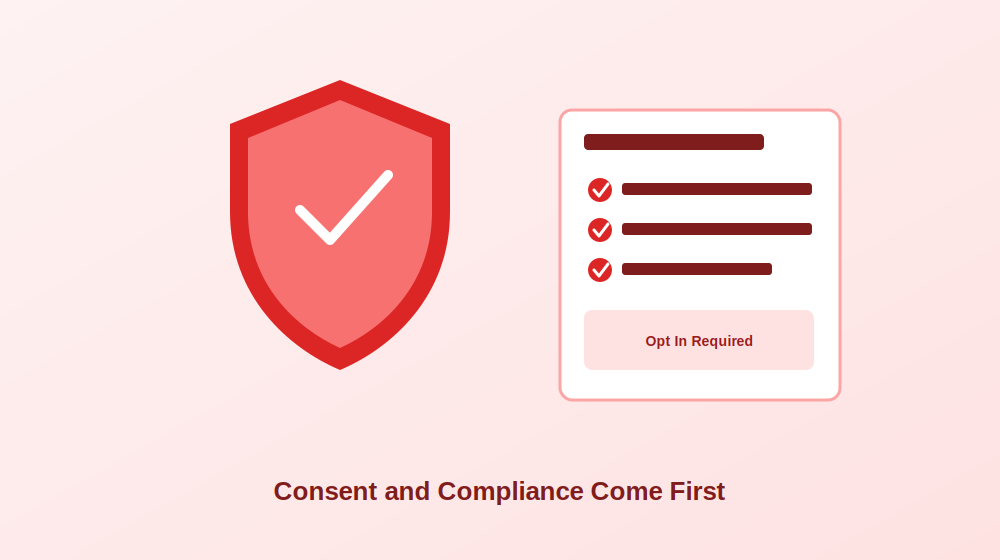
For clinics operating in the United States, compliance with the Telephone Consumer Protection Act is not optional. This law governs how and when automated text messages can be sent to patients, and violations can carry penalties of up to fifteen hundred dollars per message, which adds up extremely fast at any real sending volume.
Consent Requirements Under TCPA
The law draws a meaningful distinction between two categories of messages, each with a different consent standard.
Transactional or healthcare operations messages include things like appointment reminders, prescription alerts, and care coordination updates. Under the healthcare exemption established by federal regulators, these can be sent without prior written consent, provided they are free to the patient, directly related to their care, and include clear opt out instructions. Critically, these messages must not include any promotional or marketing content mixed in.
Marketing or promotional messages require prior express written consent. That means a patient must actively agree, either in writing or through a documented digital opt in, before receiving any message promoting a new service, a discount, or a wellness program. Verbal agreement alone does not satisfy this requirement.
A few practices help keep consent collection genuinely compliant: using a clear opt in checkbox on intake forms or your patient portal, storing a timestamped consent record tied to each patient’s file, including a simple opt out instruction such as replying STOP in every single message, and never sending marketing texts to anyone who has not explicitly opted in.
Understanding 10 DLC Registration
Since 2023, major US carriers have required businesses sending SMS through standard ten digit long code numbers to register their brand and campaigns through a centralized registry. Healthcare providers need to register their specific messaging use cases, distinguishing clearly between appointment reminders, care alerts, and promotional campaigns. Skipping this registration leads to significant message filtering and delivery failures, and completing it also signals to carriers that your messaging follows proper consent practices, which improves deliverability for legitimate patient communication overall.
Handling HIPAA Compliance for Healthcare SMS
HIPAA compliance for text messaging deserves more attention than a quick checkbox. Handling protected health information through SMS carries specific obligations that shape how you select vendors, write messages, and store records.
Keep Protected Health Information Out of Standard SMS
Standard text messages are not encrypted in transit. Sending detailed protected health information, such as a specific diagnosis, a lab result value, or medication details, directly in a text message creates real compliance risk. The safer approach keeps SMS notifications intentionally generic. A message like “Your test results are ready. Please log in to your patient portal to view them” delivers exactly the prompt a patient needs without exposing sensitive details in the message itself.
Business Associate Agreements Matter
Any third party SMS platform that touches patient data while sending messages on your behalf qualifies as a business associate under HIPAA. Before using any SMS or patient messaging platform, your practice needs a signed Business Associate Agreement in place with that vendor. This agreement legally commits the vendor to HIPAA compliant data handling, and if a vendor is unwilling to sign one, that is a clear sign to look elsewhere.
A few practical safeguards round out a solid compliance posture: storing opt in consent records securely and linking them to each patient’s file, restricting access to SMS campaign dashboards to authorized staff only, using a platform with audit logs so compliance can be demonstrated during any review, and regularly reviewing your message templates to confirm no protected health information has crept into automated content over time.
What Good SMS Performance Actually Looks Like
Understanding typical benchmarks helps a clinic set realistic goals rather than guessing at what success should look like.
Response rates in healthcare SMS average around fifty three percent, reflecting how frequently patients reply regarding appointments, prescriptions, and support requests. Opt out rates tend to sit quite low, typically around a quarter of one percent, which reflects how sensitive and well targeted this kind of communication usually is. If your opt out rate starts climbing, it is often a sign that message frequency has become too high or the content is not landing as relevant.
Click through rates on trackable links, such as those used for intake forms or payment portals, typically fall between ten and eighteen percent. Delivery rates sit remarkably high, generally between ninety eight and ninety nine percent, which underscores just how technically reliable this channel is compared to email, where deliverability issues are far more common.
Using SMS to Manage Your Practice’s Reputation
Collecting reviews is one of the more valuable things an SMS strategy can do for a practice, but the smartest approach goes beyond simply requesting a star rating.
After a visit, a short text can invite a patient to share how things went. The key is routing that response intelligently based on sentiment. A positive reply can be followed with a direct link to leave a review on a platform like Google or a relevant healthcare review site. A reply signaling dissatisfaction should instead route to a private feedback form, giving your team a chance to resolve the concern directly before it becomes a public negative review.
Practices using this kind of sentiment based routing tend to see stronger average review scores over time, not because negative feedback gets hidden, but because unhappy patients get a faster, more personal resolution and are less likely to vent publicly once they feel genuinely heard.
A Sample SMS Engagement Sequence
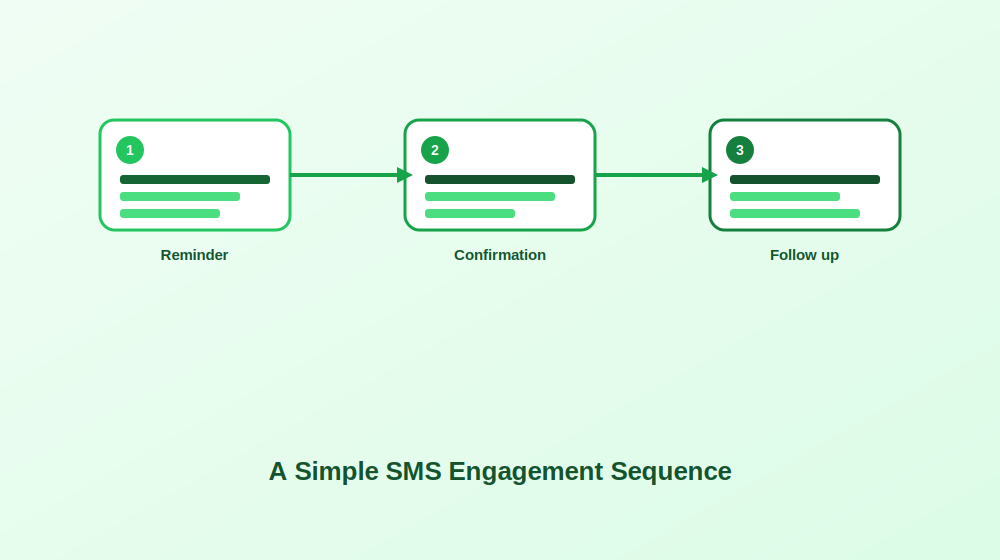
Seeing a full sequence in action helps clarify how these pieces fit together across a patient’s journey.
An initial reminder might read something like: “Hi [Patient’s Name], friendly reminder about your upcoming appointment on [Date] at [Time]. Reply C to confirm or R to reschedule.” A confirmation follow up thanks the patient and offers a way to ask questions, while a lack of response triggers a gentle nudge asking whether the scheduled time still works.
After a visit, a service promotion message might introduce something new, such as “Hope your last visit went well. Did you know we now offer [New Service]? Reply INFO for details.” A reply requesting more information triggers a clear, brief explanation along with a way to book. From there, a limited time offer can move an interested patient toward actually scheduling, followed by a confirmation once the appointment is booked, and finally a short feedback request once the new service has been delivered.
Integrating this kind of sequence into your practice management workflow makes it straightforward to run at scale without constant manual oversight, and when patients feel like their provider is genuinely reachable, it builds the kind of trust that often leads to referrals as well.
Where SMS in Healthcare Is Headed
SMS communication in healthcare continues evolving well beyond simple one way broadcasts. A few emerging applications are worth watching closely heading through 2026.
AI powered SMS campaigns increasingly use a patient’s history and behavior to trigger messages at genuinely the right moment with genuinely relevant content, rather than sending every patient the same generic seasonal reminder regardless of their actual situation.
Chatbot integrations let patients reply to a text and receive an automated response for common requests, such as confirming an appointment, requesting a prescription refill, or getting directions to a location. This reduces front desk call volume considerably while keeping patients engaged through a channel they already use comfortably.
Virtual queuing through SMS is gaining real traction in urgent care and busy specialty practices. Patients receive a text the moment they join a queue and get updates as their turn approaches, which reduces waiting room crowding and improves the overall experience without requiring additional staff.
These tools tend to work best when properly integrated with a clinic’s existing practice management system, keeping message history, consent records, and patient data consolidated in one place rather than scattered across disconnected tools.
Frequently Asked Questions
What is SMS marketing in healthcare?
It refers to using text messages to communicate with patients for purposes ranging from appointment reminders and test result notifications to promotional campaigns and wellness tips. It is one of the highest engagement communication channels available to clinics, with most messages read within minutes of arriving.
Do I need patient consent before sending healthcare SMS in the US?
Yes, though the type required depends on the message. Transactional messages tied to a patient’s care can be sent under the healthcare operations exemption with basic opt in consent. Promotional messages require prior express written consent, and every message should include a clear opt out option.
Is standard SMS HIPAA compliant?
Standard SMS is not encrypted, so including detailed protected health information like diagnoses or lab values directly in a text creates compliance risk. Use generic prompts directing patients to a secure portal instead, and ensure any SMS vendor signs a Business Associate Agreement before handling patient data.
What is 10 DLC registration and does my clinic need it?
It is a requirement from US carriers for businesses sending SMS through standard ten digit numbers. Clinics must register their brand and each messaging use case through the appropriate registry. Unregistered campaigns are frequently filtered or blocked, and registration is a straightforward, one time setup per use case.
How often should a clinic send SMS messages to patients?
It depends on the message type. Appointment reminders work well twenty four to seventy two hours before a visit. Promotional messages should generally stay limited to once or twice a month to avoid patient fatigue, while urgent alerts can be sent as needed. Always give patients a simple way to adjust their preferences or opt out entirely.
Final Thoughts
SMS has moved well beyond a simple appointment reminder tool for healthcare providers willing to use it thoughtfully. Handled with genuine attention to compliance, timing, and relevance, it becomes one of the most effective ways to keep patients informed, reduce administrative friction, and build the kind of trust that keeps people coming back and referring others. The clinics that get the most value from this channel are the ones that treat it as a real communication strategy rather than an afterthought bolted onto their existing workflow.

Introduction
The healthcare industry has experienced a major digital transformation over the last decade. From online banking to virtual learning, people have become accustomed to accessing important services through digital platforms. Healthcare is no exception. Patients today expect convenience, accessibility, and transparency when managing their health, including their mental well-being.
One of the most significant developments in this area is the rise of mental health patient portals. These secure online platforms allow patients to access medical information, communicate with healthcare providers, manage appointments, and participate more actively in their treatment plans. What was once a paper-based and often fragmented process is now becoming more connected and patient-centered.
Mental health services, in particular, benefit greatly from digital communication tools. Mental health treatment often requires long-term engagement, regular communication, and continuous monitoring. Patient portals help bridge the gap between appointments while giving individuals greater control over their healthcare journey.
Beyond improving access to care, these platforms also serve an educational purpose. They help patients better understand their conditions, treatment plans, medications, and recovery goals. As a result, mental health patient portals are transforming both healthcare delivery and health education in meaningful ways.
Understanding Mental Health Patient Portals
A mental health patient portal is a secure digital platform designed to facilitate communication and information sharing between patients and healthcare providers. These systems are usually connected to electronic health records and practice management software used by clinics and hospitals.
Through a patient portal, individuals can perform many tasks that previously required phone calls, paperwork, or in-person visits. Depending on the healthcare provider, features may include appointment scheduling, secure messaging, access to treatment records, telehealth integration, document uploads, billing management, and educational resources.
Unlike traditional communication channels, patient portals provide a centralized location where individuals can access important healthcare information at any time. This level of accessibility supports a more collaborative relationship between patients and mental health professionals.
The Growing Importance of Patient Engagement
Patient engagement has become a major focus in modern healthcare. Research consistently shows that individuals who actively participate in their treatment are more likely to achieve positive outcomes.
Mental health care is especially dependent on patient involvement. Therapy, counseling, psychiatric treatment, and behavioral interventions often require consistent participation from the patient. Success depends not only on the expertise of the healthcare provider but also on the individual’s willingness to engage with treatment recommendations.
Patient portals encourage this participation by giving individuals direct access to information about their care. Instead of feeling disconnected from the treatment process, patients become active participants in decision-making and progress monitoring.
When people can easily access appointment information, treatment summaries, and educational resources, they are more likely to remain engaged in their care journey.
Benefits for Patients
Greater Accessibility
One of the biggest advantages of patient portals is convenience. Patients no longer need to wait for office hours to access important information. Whether reviewing appointment details or checking treatment recommendations, information is available whenever needed.
This accessibility is particularly valuable for people with busy schedules, mobility limitations, or transportation challenges.
Better Understanding of Treatment
Mental health conditions can be complex. Patients may struggle to remember everything discussed during appointments, especially when dealing with stress, anxiety, or emotional difficulties.
Patient portals provide access to treatment notes, educational materials, and care plans that patients can review at their own pace. This helps improve understanding and encourages informed participation in treatment decisions.
Improved Communication
Communication plays a critical role in mental healthcare. Secure messaging systems allow patients to communicate with providers between appointments when appropriate.
While patient portals are not designed for emergencies, they can help address routine questions, clarify treatment instructions, and improve overall communication.
Increased Independence
Many individuals appreciate having greater control over their healthcare experience. Patient portals empower users to schedule appointments, update personal information, manage billing, and access records without relying heavily on administrative staff.
This sense of independence often contributes to higher patient satisfaction.
Educational Value of Patient Portals
Mental health patient portals are not merely administrative tools. They are also valuable educational resources.
Many portals provide information about:
. Anxiety disorders
. Depression
. Stress management
. Trauma recovery
. Sleep health
. Medication management
. Healthy coping strategies
. Lifestyle improvements
Educational resources help patients better understand their symptoms and treatment options. Access to reliable information can reduce confusion and encourage healthier decision-making.
For students, caregivers, and family members, these educational features can also provide useful insights into mental health conditions and recovery processes.
Supporting Telehealth Services
The rapid growth of telehealth has increased the importance of patient portals.
Virtual mental health services have become increasingly common because they offer flexibility and convenience. Many patients prefer attending therapy sessions from the comfort of their homes rather than traveling to a clinic.
Patient portals often serve as the gateway to telehealth appointments. Through a single platform, patients can:
. Schedule virtual sessions
. Receive appointment reminders
. Join secure video consultations
. Access post-session notes
. Communicate with providers
Telehealth combined with patient portals expands access to care for individuals living in remote or underserved areas.
Benefits for Mental Health Professionals
Patient portals offer significant advantages for healthcare providers as well.
Reduced Administrative Work
Administrative tasks consume valuable time and resources. Scheduling appointments, answering routine questions, processing forms, and managing billing requests can place a heavy burden on staff.
Patient portals automate many of these functions, allowing employees to focus more on patient care.
Better Organization
Digital records improve organization and accessibility. Healthcare providers can quickly retrieve information, review treatment histories, and maintain accurate documentation.
This contributes to better clinical decision-making and improved workflow efficiency.
Stronger Patient Relationships
Consistent communication helps strengthen relationships between providers and patients. When individuals feel supported and informed, they are more likely to trust their healthcare team.
Patient portals facilitate this ongoing connection while maintaining professional boundaries.
Security and Privacy Considerations
Privacy is one of the most important concerns in mental healthcare.
Mental health information is highly sensitive, making secure data management essential. Reputable patient portals use advanced security measures to protect personal information.
Common security features include:
. Encrypted communications
. Password protection
. Multi-factor authentication
. Secure document storage
. User access controls
Patients should also take steps to protect their accounts by creating strong passwords and avoiding the use of public devices when accessing sensitive information.
Maintaining trust is essential in mental healthcare, and strong security practices play a critical role in achieving that goal.
Challenges and Limitations
Despite their many benefits, patient portals are not without challenges.
Digital Literacy
Not everyone is comfortable using technology. Some individuals may need assistance navigating digital platforms.
Healthcare providers should offer guidance and support to ensure all patients can use these systems effectively.
Internet Access
Reliable internet access is not available to everyone. This can create barriers for certain populations.
Healthcare organizations should continue providing alternative communication methods when necessary.
Information Overload
Providing large amounts of information without proper context may overwhelm some patients.
Educational resources should be presented clearly and in a user-friendly format.
Maintaining Human Connection
Technology should enhance—not replace—the therapeutic relationship between patients and providers.
Successful mental health treatment still depends on empathy, trust, and meaningful human interaction.
The Future of Mental Health Patient Portals
As technology continues to evolve, patient portals are expected to become even more sophisticated.
Future developments may include:
. Artificial intelligence-powered support tools
. Personalized educational content
. Symptom tracking dashboards
. Wearable device integration
. Automated wellness monitoring
. Enhanced telehealth experiences
These innovations have the potential to improve healthcare accessibility, patient engagement, and treatment outcomes even further.
Conclusion
Mental health patient portals are transforming the way individuals interact with healthcare providers. By improving communication, increasing accessibility, supporting telehealth services, and providing educational resources, these platforms help create a more patient-centered approach to mental healthcare.
Patients benefit from greater convenience, improved understanding of treatment, and increased participation in their care. Healthcare providers benefit from streamlined workflows, better organization, and stronger patient relationships.
As digital healthcare continues to expand, mental health patient portals will likely become an essential component of modern healthcare systems. Their ability to combine healthcare delivery with education makes them particularly valuable in a world where informed and engaged patients are key to achieving better health outcomes.

Best AI Business Plan Generators: A Practical Comparison Guide

How to Use ChatGPT to Write a Research Proposal the Right Way

Best Free AI Code Generators to Try in 2026

The Transformative Benefits of Artificial Intelligence in Modern Life

AI, SaaS, SEO & Link Building: The New Operating System of Digital Growth

Why Email Marketing Still Drives Real Business Growth in 2026
-
 Tech , SaaS5 months ago
The Transformative Benefits of Artificial Intelligence in Modern Life
-
 Tech , SaaS5 months ago
AI, SaaS, SEO & Link Building: The New Operating System of Digital Growth
-
 Email Marketing4 months ago
Why Email Marketing Still Drives Real Business Growth in 2026
-

 Business , Finance5 months ago
Business & Finance in the Modern World: Strategies, Trends, and Sustainable Growth
-

 Sports , Fashion5 months ago
Sports & Fashion: The Perfect Blend of Performance, Style, and Modern Lifestyle
-
 Email Marketing5 months ago
Email Marketing in 2026: The Ultimate Strategy for Growth, Engagement, and Conversions
-

 Business , Finance5 months ago
The New Economy: How Digital Innovation, Behavioral Finance, and Smart Systems Are Redefining Global Business
-

 Health , Education5 months ago
Health and Education: The Foundation of a Strong and Successful Society