Email Marketing
Email Marketing in 2026: The Ultimate Strategy for Growth, Engagement, and Conversions

Introduction
In today’s fast-paced digital world, businesses are constantly searching for reliable and cost-effective ways to connect with their audience. While social media platforms and paid ads dominate the marketing landscape, email marketing remains one of the most powerful and high-ROI channels available.
From startups to enterprise-level organizations, email marketing continues to drive engagement, nurture leads, and boost conversions. The reason is simple: email provides a direct, personalized, and measurable communication channel.
This article explores modern email marketing strategies, trends, and best practices that can help businesses scale sustainably in 2026 and beyond.
What is Email Marketing?
Email marketing is a digital marketing strategy that involves sending targeted messages to a group of people via email. These messages can include:
. Promotional offers
. Newsletters
. Product updates
. Educational content
. Customer retention campaigns
Unlike other marketing channels, email allows businesses to own their audience instead of relying on third-party platforms.
Why Email Marketing Still Dominates
Despite the rise of social media and AI-driven marketing tools, email marketing continues to outperform many channels.
Key Benefits:
. High ROI: One of the highest returns among digital channels
. Direct communication: No algorithm dependency
. Personalization: Tailored messages for different audiences
. Scalability: Works for small businesses and large enterprises
. Automation: Saves time while increasing efficiency
Modern businesses are now integrating email strategies into a broader digital growth ecosystem, combining automation, analytics, and intelligent targeting.
Building a Strong Email List
A successful email marketing strategy starts with a high-quality email list.
Best Practices for List Building:
. Use lead magnets (ebooks, checklists, free tools)
. Add signup forms on website pages
. Offer discounts or incentives
. Use exit-intent popups
. Leverage content marketing
What to Avoid:
. Buying email lists ❌
. Adding users without consent ❌
A clean and permission-based list ensures better deliverability and engagement rates.
Types of Email Campaigns
To maximize results, businesses should use a mix of email campaign types.
1. Welcome Emails
The first impression matters. Welcome emails introduce your brand and set expectations.
2. Newsletter Emails
Regular updates that provide value, insights, and industry news.
3. Promotional Emails
Used to announce discounts, sales, or new products.
4. Drip Campaigns
Automated email sequences based on user behavior.
5. Re-engagement Emails
Target inactive subscribers to bring them back.
Personalization: The Game Changer
Generic emails no longer work. Modern users expect personalized experiences.
Personalization Techniques:
. Use recipient’s name
. Segment audience based on behavior
. Send location-based offers
. Recommend products based on past activity
Businesses leveraging data-driven personalization often see higher open and conversion rates.
Email Automation for Scalability
Automation is transforming how businesses handle email marketing.
Benefits of Automation:
. Saves time
. Ensures consistency
. Improves targeting
. Increases conversions
Common Automated Flows:
. Welcome series
. Abandoned cart emails
. Follow-ups
. Lead nurturing sequences
Automation allows companies to build a sustainable and scalable marketing system.
Writing High-Converting Email Copy
Content is the backbone of email marketing success.
Key Elements:
1. Subject Line
. Short and compelling
. Creates curiosity
. Avoid spam words
2. Email Body
. Clear and concise
. Focus on value
. Use storytelling
3. Call-to-Action (CTA)
. Direct and actionable
. One main goal per email
Design and User Experience
A well-designed email improves engagement and readability.
Design Tips:
. Use mobile-friendly layouts
. Keep it visually clean
. Use images strategically
. Maintain brand consistency
Deliverability and Spam Avoidance
Even the best email is useless if it lands in spam.
Tips to Improve Deliverability:
. Use verified domains
. Avoid spam trigger words
. Maintain a good sender reputation
. Clean your email list regularly
. Use double opt-in
Measuring Email Marketing Performance
Tracking performance helps optimize campaigns.
Important Metrics:
. Open Rate
. Click-Through Rate (CTR)
. Conversion Rate
. Bounce Rate
. Unsubscribe Rate
Data-driven decisions lead to better outcomes and long-term growth.
The Role of AI in Email Marketing
Artificial Intelligence is reshaping email marketing.
AI Applications:
. Predictive analytics
. Smart segmentation
. Automated content generation
. Send-time optimization
Businesses adopting AI are building more efficient and intelligent marketing systems.
Email Marketing for Business Growth
Email marketing is not just a communication tool—it’s a growth engine.
It helps businesses:
. Build long-term relationships
. Increase customer lifetime value
. Improve retention
. Drive consistent revenue
When combined with modern digital strategies, email marketing becomes part of a larger business growth framework that includes automation, analytics, and strategic planning.
Common Mistakes to Avoid
Even experienced marketers make mistakes.
Avoid These:
. Sending too many emails
. Ignoring segmentation
. Using misleading subject lines
. Not optimizing for mobile
. Lack of clear CTA
Fixing these issues can significantly improve performance.
Future of Email Marketing
The future of email marketing lies in:
. AI-driven personalization
. Hyper-targeted campaigns
. Integration with SaaS tools
. Data privacy and compliance
Businesses that adapt to these trends will gain a competitive advantage in digital marketing.
Conclusion
Email marketing remains one of the most powerful tools for businesses in 2026. With the right strategy, personalization, and automation, companies can build meaningful relationships and drive consistent growth.
Instead of relying solely on paid channels, smart businesses are investing in long-term email marketing systems that deliver sustainable results.
By focusing on value, relevance, and user experience, email marketing can become the foundation of a successful digital strategy.

Patients check their inbox constantly, whether they are sitting at a desk or scrolling on their phone between errands. That makes email one of the most dependable channels a healthcare practice has for staying connected with the people it serves. Done well, it keeps patients informed between visits, cuts down on missed appointments, and builds the kind of ongoing trust that keeps people coming back.
Healthcare automation makes this genuinely achievable without adding hours of manual work to your staff’s day. Triggered appointment reminders, post visit follow ups, and educational newsletters can all run quietly in the background, keeping patients engaged while your team focuses on care. Email is also simply convenient for sharing things patients want to reference later, like updated holiday hours, a new service offering, telehealth availability, or a policy change.
But healthcare email marketing carries a higher bar than typical marketing emails. You are handling sensitive personal information, which means compliance with regulations like HIPAA and GDPR, careful consent management, and secure handling of patient data are not optional extras. They are the baseline.
What to Look for in a Healthcare Email Marketing Platform
Email and marketing automation tools serve all kinds of industries, from software companies to travel agencies, and healthcare is no exception. Choosing the right one for your practice means balancing strict compliance needs against usability, decent templates, and genuinely useful automation. Here is what actually matters when evaluating your options.
Compliance and Security
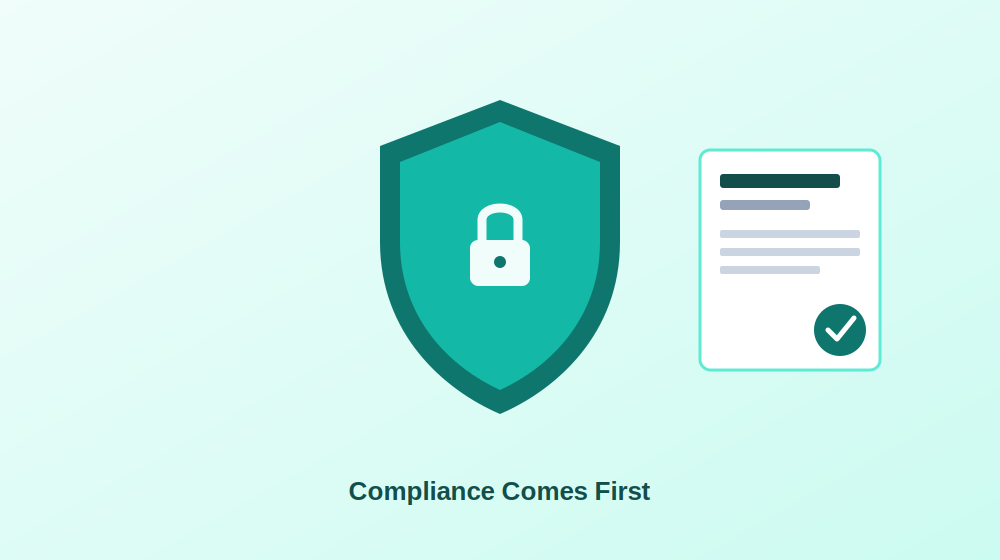
Any platform handling healthcare communication needs to align with HIPAA in the United States, GDPR in Europe, or both if your practice operates internationally. That means secure data handling, encrypted transmission, and clear opt in and opt out processes that genuinely protect patient privacy.
If your emails will touch protected health information under HIPAA, the platform must be willing to sign a Business Associate Agreement. This is a legally binding contract that requires the vendor to safeguard that information properly and share liability if a breach occurs. Without a signed agreement in place, using a platform to transmit or store patient health data is simply not legal, regardless of how good the platform otherwise is.
Ease of Use
Your staff needs to be able to build and send campaigns without a steep learning curve or dedicated technical training. Platforms with plug and play templates and pre built automation recipes let your team focus on communicating with patients rather than wrestling with software.
Automation Capabilities
Repetitive but essential tasks, appointment reminders, post visit follow ups, prescription refill notices, and new patient onboarding sequences, are exactly what automation exists to handle. Setting up trigger based sequences means patients receive timely, relevant messages without anyone on your team manually sending them one by one. This alone meaningfully reduces no shows and keeps patients consistently in the loop. Whatever platform manages these sequences, the messages still pass through a mail sending layer before landing in an inbox, and practices sending notifications from their own internal systems sometimes start with a basic SMTP server for lower volume needs before scaling up.
Templates and Design
Templates should look professional without requiring any design skill, and they absolutely need to be mobile friendly, since a large share of patients will open your emails on a phone. Look for layouts with clear text, sensible visuals, and obvious calls to action so that patients of every age can actually read and act on what you send.
Data and Personalization
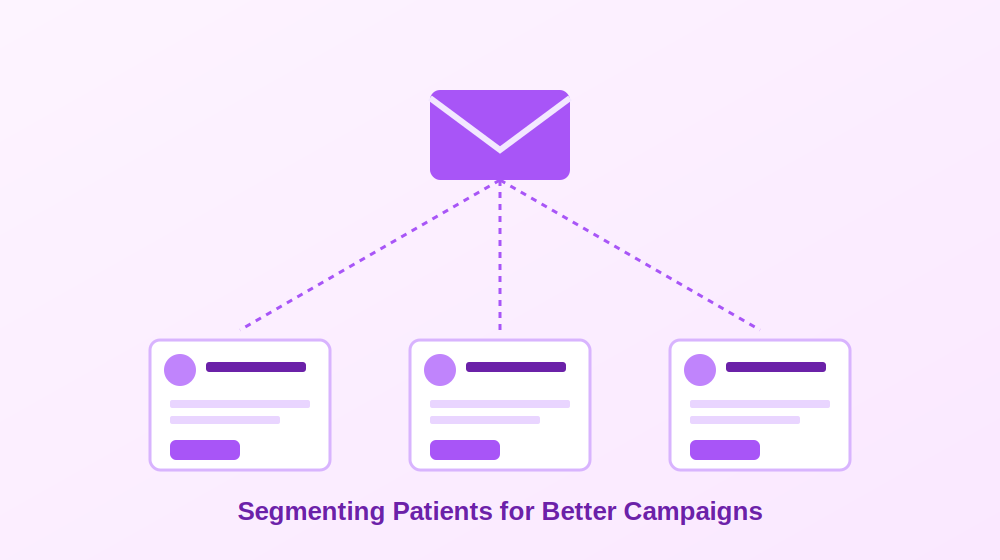
Not every patient needs the same message. A solid platform lets you segment your list and track how each group actually engages with your communications. A patient managing a chronic condition cares about very different content than someone who only visits for an annual wellness check. Watching metrics like open rates and click through behavior within each segment lets you refine what you send to match what actually resonates.
Integration Options
A platform that connects directly with your practice management system or CRM saves significant time and keeps your marketing grounded in accurate clinical data. To keep these integrations running securely behind the scenes, many practices also lean on managed IT support to maintain uptime, protect patient information, and keep clinical and marketing systems talking to each other reliably.
The Best Email Marketing Platforms for Healthcare
Choosing between these options comes down to your list size, your goals, and which tasks you most need to automate. Before committing to any platform, always confirm directly whether the vendor will sign a Business Associate Agreement if you plan to include protected health information in your campaigns.
1. Moosend
Pricing: Around nine dollars a month, with a free thirty day trial
Best feature: Advanced segmentation paired with a no code email designer
Downside: Fewer native integrations with healthcare specific systems compared to some competitors
Moosend suits practices that want clean, patient focused emails without investing heavy time into design. The platform offers full GDPR compliance and carries a third party HIPAA attestation, which works well for campaigns that avoid protected health information specifically.
Segmentation here is genuinely easy, letting clinics group patients by condition, age, treatment plan, or past activity, then send tailored messages accordingly. A practice might, for example, set up an automated reactivation sequence that identifies patients who have not visited in six months and sends them an offer for a discounted annual checkup.
The drag and drop template builder requires no coding knowledge at all, which makes it a strong fit for small and mid sized practices that want solid features without stretching the budget.
2. Constant Contact
Pricing: Around twelve dollars a month, with a free fourteen day trial
Best feature: Reliable scheduling paired with built in event management
Downside: Personalization options are fairly basic next to some competitors
Constant Contact keeps healthcare providers visible in patient inboxes through solid list segmentation and contact management. The drag and drop editor makes building emails simple, and the built in event management tools let you track RSVPs and attendance directly, which is genuinely useful for community screening days or health workshops.
The platform supports GDPR compliant workflows including proper opt in and opt out handling, making it safe for general communications that do not involve protected health information. For clinics willing to sign its standard Business Associate Agreement, Constant Contact becomes fully suitable for HIPAA compliant healthcare marketing as well.
A common use case is a welcome sequence for new patients, automatically sending a series of emails that introduce staff, explain office policies, and link to the online patient portal the moment someone registers.
3. Mailchimp
Pricing: Around thirteen dollars a month, with a free plan available
Best feature: A large, flexible template library
Downside: Costs climb quickly as your contact list or feature needs grow
Mailchimp remains one of the most widely used email marketing platforms across industries, and healthcare is no exception. Its polished templates suit branded health campaigns, urgent updates like seasonal closures, or routine appointment reminders. The reporting dashboard makes it easy to see whether patients are actually engaging and acting on your messages.
A practical example is a seasonal awareness campaign that automatically sends flu shot reminders to older patients heading into autumn. If your budget supports it and you value design flexibility with detailed reporting, Mailchimp is a strong general purpose option.
The important caveat is that Mailchimp does not support HIPAA compliant use cases and offers no Business Associate Agreement option, so it is not appropriate for campaigns involving protected health information.
4. ActiveCampaign
Pricing: Around fifteen dollars a month for the email marketing tier, with a free fourteen day trial
Best feature: Strong segmentation combined with powerful follow up sequencing
Downside: The automation builder can feel complex for beginners
ActiveCampaign goes beyond basic email marketing, letting practices map out genuinely complex patient journeys. A dental office, for instance, could build a six month cleaning reminder flow so appointments never slip through the cracks, or trigger a post visit sequence that automatically sends care instructions and a feedback survey once a patient leaves.
Specialty practices like physiotherapy clinics can use it to send personalized exercise tips after each visit, keeping patients engaged well beyond the appointment itself. Built in CRM features track patient interactions over time and support lead scoring, keeping administrative work moving without constant manual input.
ActiveCampaign fits larger practices focused on long term patient engagement particularly well. It is advertised as HIPAA compliant, but that only applies to Enterprise tier accounts with a signed Business Associate Agreement in place.
5. Brevo
Pricing: Around nine dollars a month, with a free plan available
Best feature: Dependable transactional email delivery
Downside: A smaller template library than most competitors offer
Brevo stands out for practices that need both marketing campaigns and reliable transactional messages, things like appointment confirmations, patient portal password resets, or quick test result notifications. Its template builder is intuitive enough to produce professional looking newsletters without any design background.
The template library is smaller than some alternatives, but what it lacks in volume it makes up for in affordability and straightforward functionality. Built in analytics track engagement, and multilingual support makes Brevo particularly useful for practices serving diverse patient populations or operating across multiple countries.
The significant limitation is that Brevo is not HIPAA compliant, which rules it out for practices planning to send campaigns involving protected health information.
Why Healthcare Email Marketing Is Worth the Investment
Used strategically, email marketing is remarkably cost effective for practices managing tight resources. It strengthens communication, builds trust, and streamlines the ongoing relationship between a practice and its patients.
Unlike phone calls, which are costly and often disruptive for both staff and patients, email reaches large patient groups at a fraction of the cost, without the manual effort and human error that phone based outreach tends to involve.
Missed appointments cost everyone involved, patients and providers alike. Well timed email reminders and follow ups reduce no shows, encourage patients to rebook after a cancellation, and give patients clear pre visit instructions so they arrive properly prepared.
Beyond the operational benefits, healthcare email marketing genuinely strengthens the relationship between patients and their providers. Thoughtful, consistent campaigns help patients feel cared for even outside the walls of the clinic. Receiving relevant, well timed updates builds trust and loyalty, making patients more likely to return for future care rather than drifting to a competitor.
Seven Healthcare Email Campaign Ideas Worth Implementing
If you are looking for practical starting points, focus on content that gives patients immediate, tangible value. A well rounded strategy blends educational, administrative, and relational content.
Welcome emails set the tone the moment a new patient joins your practice. Introduce your team, explain what patients can expect, and link directly to portal registration or new patient forms.
Appointment reminders and follow ups remain one of the most effective tools for reducing no shows. Automated reminders sent a few days before an appointment, paired with a follow up afterward covering post treatment care, keep patients engaged throughout their journey with your practice.
Seasonal health tips tied to the time of year, allergy management in spring, sun safety in summer, flu prevention heading into fall, give patients genuinely useful information exactly when they need it.
Birthday greetings are a small, simple way to remind patients they are seen as individuals rather than just a chart number. Keep these warm and brief, perhaps paired with a gentle nudge to schedule an annual checkup.
Referral requests sent after a positive visit or survey response tap into one of healthcare’s most powerful growth channels. Making it easy, with a direct link to your booking page, removes friction from the ask.
Chronic care management updates deliver ongoing value to patients managing long term conditions, covering new treatment options, lifestyle guidance, or invitations to relevant support groups.
Clinic updates and announcements keep your patient base informed about holiday hours, new staff, or newly available services. Transparent, proactive communication reinforces that your practice is reliable and worth staying with.
Building Your Healthcare Email List the Right Way
Growing a healthcare email list has to rest on ethical, transparent methods that put patient consent first. Adding patients to a marketing list without their explicit permission is simply not acceptable, so organic growth strategies are the only real path forward.
Start by collecting email addresses during intake. New patient registration forms should include a clear, optional checkbox where patients can choose to receive health tips, updates, and appointment reminders.
Your website is another natural collection point. Simple, non intrusive opt in forms work well, especially when paired with a small incentive like a downloadable guide on managing seasonal allergies or a checklist for preparing for an annual physical.
Social media rounds out the picture. Promoting your newsletter on platforms like Facebook or LinkedIn and directing followers to your website’s signup form extends your reach naturally. Whatever channel you use, be explicit about what subscribers will actually receive, so expectations are clear and consent is genuinely informed from the start.
Frequently Asked Questions
What is a Business Associate Agreement in healthcare email marketing?
A Business Associate Agreement is a legally required contract between a healthcare provider and a software vendor. It ensures the vendor properly safeguards any protected health information they process on your behalf. Without a signed agreement, using that platform for emails containing patient health data violates HIPAA.
Is Mailchimp HIPAA compliant?
No. Mailchimp does not sign Business Associate Agreements with its users, which means it cannot legally be used for emails containing protected health information. It remains fine for general wellness newsletters and non PHI marketing, as long as specific patient data or medical details are strictly excluded.
Can I use standard email platforms for patient communications?
Standard platforms work for general marketing, such as wellness newsletters or holiday hours, as long as no protected health information is included. For personalized appointment reminders or test results, you need a HIPAA compliant platform offering a signed Business Associate Agreement.
How do I reduce patient no shows using email marketing?
The most effective approach is an automated reminder sequence: an initial reminder about a week before the appointment, a second reminder the day before, and a follow up if the appointment is missed. Including a clear confirm or reschedule button makes it simple for patients to take action immediately.
Final Thoughts
Choosing the right healthcare email marketing platform ultimately comes down to compliance, ease of use, and how well it helps you actually connect with patients. The right tool reduces no shows, supports patient education, and strengthens relationships, all without straining your budget or your staff’s time. Healthcare automation, at its best, is not really about sending more messages. It is about improving patient care, building genuine trust, and keeping people engaged with their own health long after they leave your office.
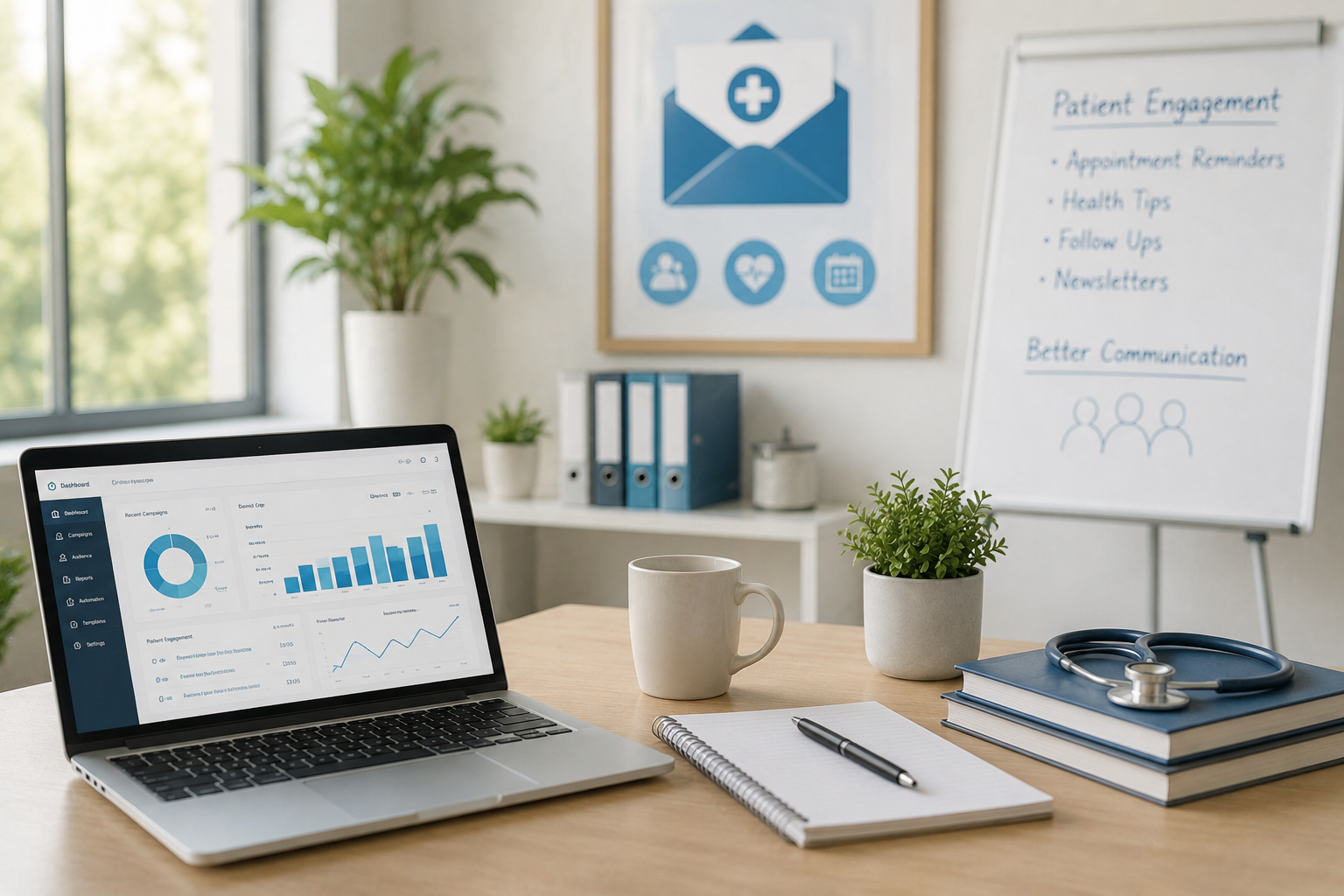
Introduction
Healthcare providers today face increasing challenges when it comes to patient communication. Patients expect timely updates, appointment reminders, health tips, and easy access to information. At the same time, clinics and medical practices must manage growing administrative workloads while maintaining high standards of care.
This is where healthcare email marketing software becomes valuable. Unlike traditional communication methods, email allows healthcare organizations to stay connected with patients in a cost-effective and scalable way. From appointment reminders to educational newsletters, email marketing helps clinics improve patient engagement, reduce no-shows, and strengthen long-term relationships.
When combined with healthcare automation and practice management software, email marketing becomes an essential tool for modern medical practices. It enables healthcare providers to deliver relevant information at the right time while reducing manual administrative work.
In this guide, we will explore how healthcare email marketing software works, its benefits, essential features, and practical strategies for improving patient communication.
Why Email Marketing Is Important for Healthcare Providers
Healthcare communication extends far beyond in-person appointments. Patients often need reminders, educational content, follow-up instructions, and updates about healthcare services.
Email marketing provides a direct channel that allows providers to communicate consistently with patients.
Some key advantages include:
. Cost-effective patient communication
. Better patient engagement
. Improved appointment attendance
. Stronger patient retention
. Increased awareness of healthcare services
. Better patient education
. Reduced administrative workload
Unlike social media platforms where visibility depends on algorithms, emails arrive directly in a patient’s inbox. This creates a reliable communication channel that healthcare organizations can use throughout the patient journey.
The Role of Healthcare Automation
Healthcare automation has transformed how clinics communicate with patients. Instead of manually sending emails, providers can automate communications based on specific actions or schedules.
For example:
Appointment Reminders
Patients automatically receive reminders before scheduled appointments.
Follow-Up Communications
Patients receive post-visit care instructions without requiring staff intervention.
Preventive Care Notifications
Healthcare providers can remind patients about vaccinations, annual checkups, or screening tests.
Patient Reactivation Campaigns
Inactive patients can receive personalized messages encouraging them to return for care.
Automation saves time while ensuring patients receive timely and relevant information.
Benefits of Healthcare Email Marketing Software
Improved Patient Engagement
Patient engagement is one of the most important factors influencing healthcare outcomes.
When patients receive useful information regularly, they become more involved in managing their health. Educational newsletters, wellness tips, and preventive care reminders encourage patients to stay connected with their healthcare providers.
Consistent communication helps build trust and improves the overall patient experience.
Reduced Patient No-Shows
Missed appointments create scheduling gaps and revenue loss for healthcare providers.
Automated email reminders help patients remember upcoming appointments and provide opportunities to confirm or reschedule.
Reducing no-shows improves operational efficiency and patient care continuity.
Enhanced Patient Retention
Acquiring new patients is often more expensive than retaining existing ones.
Email marketing allows healthcare providers to maintain regular contact with patients between visits. By delivering valuable information and reminders, clinics remain top-of-mind when patients need healthcare services.
Better Patient Education
Patients often leave appointments with questions or forget important instructions.
Email campaigns can reinforce educational information by sharing:
. Treatment guidelines
. Preventive care recommendations
. Wellness resources
. Lifestyle improvement tips
. Medication reminders
Educated patients tend to make better healthcare decisions.
Increased Operational Efficiency
Healthcare staff spend significant time managing communication tasks.
Automation reduces manual work associated with appointment reminders, follow-ups, and patient outreach. This allows staff to focus on delivering quality patient care.
Essential Features of Healthcare Email Marketing Software
Not all email marketing platforms are suitable for healthcare organizations.
The following features should be considered when evaluating software solutions.
Compliance and Security
Healthcare organizations handle sensitive patient information.
A reliable platform should provide:
. Secure data storage
. Data encryption
. Access controls
. Consent management
. HIPAA compliance support
. GDPR compliance capabilities
Protecting patient information should always be a priority.
Easy-to-Use Interface
Healthcare professionals should not need advanced technical skills to create campaigns.
The best platforms offer:
. Drag-and-drop editors
. Pre-designed templates
. Simple campaign management
. User-friendly dashboards
Ease of use improves adoption and efficiency.
Marketing Automation
Automation is one of the most valuable features in healthcare email marketing.
Common automation capabilities include:
. Appointment reminders
. Welcome sequences
. Follow-up emails
. Patient onboarding
. Re-engagement campaigns
Automation ensures consistent communication without increasing workload.
Personalization Tools
Patients expect personalized experiences.
Modern platforms allow providers to customize communications using:
. Patient names
. Appointment history
. Service preferences
. Age groups
. Health interests
Personalized messages often generate higher engagement rates.
Reporting and Analytics
Data-driven decisions improve campaign performance.
Healthcare providers should monitor:
. Open rates
. Click-through rates
. Conversion rates
. Appointment bookings
. Unsubscribe rates
Analytics help identify opportunities for improvement.
How Practice Management Software Supports Email Marketing
Email marketing becomes significantly more effective when integrated with practice management software.
Practice management systems centralize important information such as:
. Patient records
. Appointment schedules
. Communication history
. Billing information
. Patient preferences
Integration allows healthcare providers to deliver more accurate and relevant communications.
For example, appointment reminders can be triggered automatically based on scheduling data. Follow-up messages can be personalized according to treatment history.
This integration creates a more seamless patient experience while improving operational efficiency.
Effective Healthcare Email Campaign Ideas
Welcome Emails
First impressions matter.
When a new patient joins a practice, an automated welcome email can:
. Introduce the clinic
. Explain services
. Share office policies
. Provide portal access information
This helps establish trust from the beginning.
Appointment Reminders
Appointment reminder campaigns remain one of the most effective healthcare email strategies.
Sending reminders several days before appointments can significantly reduce missed visits.
Follow-Up Emails
Post-appointment emails help reinforce care plans and improve patient outcomes.
Examples include:
. Recovery instructions
. Medication guidance
. Satisfaction surveys
. Educational resources
Seasonal Health Campaigns
Seasonal content provides timely value to patients.
Examples include:
. Flu prevention tips
. Allergy management advice
. Summer health guidance
. Winter wellness recommendations
Health Education Newsletters
Educational newsletters position healthcare providers as trusted sources of information.
Topics may include:
. Nutrition
. Exercise
. Mental wellness
. Chronic disease management
. Preventive care
Patient Reactivation Campaigns
Patients who have not visited recently can receive targeted messages encouraging them to schedule appointments.
These campaigns help improve retention and increase revenue.
Building a Healthcare Email List
A successful email marketing strategy begins with a quality subscriber list.
Effective methods include:
Website Sign-Up Forms
Healthcare websites can include newsletter subscription opportunities.
Patient Registration Forms
Patients can opt in to receive updates during registration.
Educational Resources
Offering downloadable health guides can encourage email subscriptions.
Community Events
Health screenings and community programs provide opportunities to collect consent-based email subscriptions.
Always ensure compliance with applicable privacy regulations.
Common Healthcare Email Marketing Mistakes
Sending Too Many Emails
Excessive communication can lead to subscriber fatigue.
Healthcare providers should focus on delivering quality rather than quantity.
Ignoring Mobile Optimization
Many patients read emails on smartphones.
Mobile-friendly designs improve readability and engagement.
Poor Segmentation
Different patients have different needs.
Segmentation helps ensure messages remain relevant and useful.
Lack of Personalization
Generic emails often perform poorly.
Personalized communication creates stronger patient connections.
Neglecting Analytics
Performance data provides valuable insights that can improve future campaigns.
The Future of Healthcare Email Marketing
Technology continues to reshape healthcare communication.
Future trends include:
. Artificial intelligence personalization
. Predictive patient engagement
. Advanced automation workflows
. Behavioral targeting
. Integrated communication platforms
Healthcare organizations that embrace these innovations will be better positioned to improve patient experiences and operational efficiency.
Conclusion
Healthcare email marketing software has become an essential tool for modern medical practices. By combining email marketing with healthcare automation and practice management software, providers can improve patient engagement, reduce no-shows, increase retention, and strengthen communication.
Successful healthcare communication is not simply about sending emails. It is about delivering relevant, timely, and valuable information that supports better patient experiences and long-term practice growth.
As healthcare continues to evolve, organizations that invest in effective patient communication strategies will be better equipped to meet patient expectations while achieving sustainable growth.
Introduction
The digital business landscape continues to evolve at a remarkable pace. New marketing channels appear every year, social media algorithms constantly change, and online advertising costs continue to increase. Despite these developments, one marketing channel continues to deliver consistent results for businesses of all sizes: email marketing.
Many ecommerce brands focus heavily on paid advertising, influencer partnerships, and social media campaigns. While these strategies can generate visibility, they often require continuous spending to maintain results. Email marketing offers something different. It creates a direct connection between businesses and customers, allowing brands to communicate without relying on third-party platforms.
In 2026, email marketing remains one of the most effective methods for customer engagement, lead nurturing, and long-term business growth. Businesses that invest in strong email marketing systems are building loyal audiences, increasing conversions, and generating sustainable revenue.
Why Email Marketing Still Matters
Some marketers believed that social media would eventually replace email marketing. However, real-world results have shown otherwise.
Email continues to provide businesses with a reliable communication channel that reaches customers directly. Unlike social media platforms where visibility depends on algorithms, email messages are delivered straight to subscribers who have already expressed interest in a business.
This direct relationship creates opportunities for stronger customer engagement and higher conversion rates. Businesses can communicate with customers on a more personal level while delivering information that matches individual interests and needs.
Another major advantage is ownership. Businesses own their email lists, while social media audiences remain controlled by external platforms. This makes email marketing a valuable long-term asset.
The Role of Email Marketing in Ecommerce
Ecommerce businesses face a common challenge. Most visitors do not purchase products during their first visit.
Customers often browse products, compare prices, read reviews, and leave without completing a transaction. Without an effective follow-up strategy, these potential customers may never return.
Email marketing helps businesses stay connected throughout the customer journey. It allows brands to continue conversations, answer questions, share valuable information, and encourage future purchases.
From attracting new subscribers to retaining existing customers, email marketing supports every stage of the buying process.
Building a High-Quality Email List
The success of email marketing begins with the quality of the subscriber list.
Many businesses make the mistake of focusing only on list size. A smaller list of engaged subscribers is often more valuable than a large list of uninterested contacts.
Successful brands attract subscribers by offering value. This may include:
. Exclusive content
. Product discounts
. Industry insights
. Educational resources
. Free guides and checklists
. Early access to promotions
When people subscribe because they genuinely want information from a business, engagement levels increase naturally.
Building trust from the beginning creates stronger relationships and better long-term results.
Creating Effective Welcome Emails
First impressions matter in email marketing.
When someone joins an email list, the welcome email often determines whether they will remain engaged with future communications.
A strong welcome email introduces the brand, explains its value, and sets expectations for future messages.
Effective welcome emails often include:
. A brief brand introduction
. Key business benefits
. Helpful resources
. Popular products or services
. A clear next step
The goal is not immediate sales. Instead, businesses should focus on building trust and creating a positive customer experience.
Personalization and Customer Engagement
Modern customers expect personalized experiences.
Generic emails sent to every subscriber are becoming less effective because they fail to address individual interests and behaviors.
Personalization allows businesses to deliver more relevant content by using information such as:
. Browsing activity
. Purchase history
. Product preferences
. Customer location
. Engagement patterns
When subscribers receive content that matches their interests, they are more likely to open emails, click links, and take action.
Personalization also strengthens relationships because customers feel understood rather than treated as anonymous contacts.
Email Automation and Business Efficiency
Automation has transformed email marketing into a highly scalable business strategy.
Instead of manually sending emails to individual subscribers, businesses can create automated workflows that respond to customer actions.
For example, automation can trigger emails when:
. Someone joins a mailing list
. A customer abandons a shopping cart
. A purchase is completed
. A subscriber becomes inactive
. A special date or event occurs
Automation saves time while ensuring consistent communication.
It also improves customer experiences by delivering the right message at the right moment.
Abandoned Cart Recovery Strategies
Cart abandonment remains one of the biggest challenges in ecommerce.
Many customers add products to their cart but leave before completing a purchase. This behavior can occur for several reasons, including distractions, uncertainty, or comparison shopping.
Abandoned cart emails provide an opportunity to recover these lost sales.
Rather than aggressively pushing customers to buy, effective recovery emails remind users about products they viewed while offering helpful information.
Businesses often see significant revenue increases by implementing simple abandoned cart sequences.
These emails serve as reminders while helping customers complete purchasing decisions they were already considering.
Customer Retention Through Email Marketing
Acquiring new customers is important, but retaining existing customers often provides greater long-term value.
Returning customers tend to purchase more frequently and spend more over time. They are also more likely to recommend businesses to others.
Email marketing plays a critical role in customer retention by maintaining ongoing communication after purchases occur.
Retention-focused campaigns may include:
. Product recommendations
. Educational content
. Loyalty rewards
. Exclusive offers
. Customer appreciation messages
Consistent communication helps businesses remain relevant while encouraging repeat purchases.
Using Content to Build Trust
Not every email should focus on selling products.
The most successful email marketing strategies combine promotional content with valuable information.
Educational emails can help businesses establish authority while strengthening customer relationships.
Useful content may include:
. Industry insights
. How-to guides
. Product tutorials
. Expert advice
. Customer success stories
When subscribers consistently receive valuable information, they become more likely to trust future recommendations.
Trust remains one of the most important factors influencing purchasing decisions.
Measuring Email Marketing Success
Data plays an important role in improving email marketing performance.
Businesses should regularly monitor key metrics to understand how campaigns perform and identify opportunities for improvement.
Important metrics include:
Open Rate
Measures how many subscribers open emails.
Click-Through Rate
Measures how many recipients click links within emails.
Conversion Rate
Tracks completed actions resulting from email campaigns.
Subscriber Growth
Measures how quickly an email list expands.
Unsubscribe Rate
Shows how many subscribers leave the mailing list.
Analyzing these metrics helps businesses make smarter marketing decisions and improve future campaigns.
Common Email Marketing Mistakes
Even experienced marketers sometimes make mistakes that reduce campaign performance.
Some common issues include:
. Sending emails too frequently
. Ignoring mobile optimization
. Using misleading subject lines
. Failing to segment audiences
. Focusing only on promotions
. Neglecting performance analysis
Avoiding these mistakes can improve engagement and create a better experience for subscribers.
Successful email marketing requires consistency, relevance, and a customer-focused approach.
The Future of Email Marketing
Technology continues to shape the future of email marketing.
Artificial intelligence, automation, predictive analytics, and behavioral tracking are making campaigns more intelligent and personalized than ever before.
Future email marketing systems will become increasingly capable of:
. Predicting customer interests
. Delivering personalized recommendations
. Automating customer journeys
. Improving audience segmentation
. Optimizing campaign performance in real time
Businesses that embrace these innovations will be better positioned to compete in increasingly crowded digital markets.
Conclusion
Email marketing continues to be one of the most effective growth strategies available to ecommerce businesses in 2026. While digital marketing channels continue to evolve, email remains a powerful tool for customer engagement, lead nurturing, and revenue generation.
Businesses that focus on personalization, automation, customer value, and long-term relationship building can create marketing systems that deliver sustainable results.
The future of ecommerce growth belongs to brands that build direct connections with their audiences. Email marketing provides the foundation for those connections, helping businesses increase trust, improve retention, and achieve long-term success in an increasingly competitive digital environment.

Best AI Business Plan Generators: A Practical Comparison Guide

How to Use ChatGPT to Write a Research Proposal the Right Way

Best Free AI Code Generators to Try in 2026

The Transformative Benefits of Artificial Intelligence in Modern Life

AI, SaaS, SEO & Link Building: The New Operating System of Digital Growth

Why Email Marketing Still Drives Real Business Growth in 2026
-
 Tech , SaaS5 months ago
The Transformative Benefits of Artificial Intelligence in Modern Life
-
 Tech , SaaS5 months ago
AI, SaaS, SEO & Link Building: The New Operating System of Digital Growth
-
 Email Marketing5 months ago
Why Email Marketing Still Drives Real Business Growth in 2026
-

 Business , Finance5 months ago
Business & Finance in the Modern World: Strategies, Trends, and Sustainable Growth
-

 Sports , Fashion5 months ago
Sports & Fashion: The Perfect Blend of Performance, Style, and Modern Lifestyle
-

 Business , Finance5 months ago
The New Economy: How Digital Innovation, Behavioral Finance, and Smart Systems Are Redefining Global Business
-

 Health , Education5 months ago
Health and Education: The Foundation of a Strong and Successful Society
-
 Email Marketing5 months ago
The Future of Customer Communication: Smart Email Systems, Automation, and Digital Engagement in 2026